
Biweekly pool service typically costs $100–$160 a month, about $40–$60 less than weekly service at $140–$220. It holds up on screened pools, pools with a salt system or chlorinator, and in cooler months. In summer heat, under trees or with heavy use, a single algae bloom costs more than six months of the savings.
If you are unsure, run weekly through summer and ask your pro whether the pool holds its chlorine for 14 days once the water cools.
Weekly vs. biweekly at a glance
| Weekly service | Biweekly service | |
|---|---|---|
| Typical monthly price, full service | $140–$220 | $100–$160 |
| Typical price per visit | $30–$50 | $45–$75 |
| Typical yearly cost | $1,700–$2,650 | $1,200–$1,900 |
| Visits per year | 52 | 26 |
| Days between chlorine checks | 7 | 14 |
| Algae risk in summer | Low | Moderate to high |
| Owner work between visits | Little or none | Skimming, basket checks, a midweek chlorine test |
| Best for | Most Sunbelt pools, especially in summer | Screened, low-debris, automated pools, or cooler months |
Why biweekly is not half the price
Biweekly service typically costs 65–75% of the weekly rate, not 50%. Three costs do not halve:
- 1Visit length. Two weeks of debris means fuller baskets and more brushing. A 25-minute weekly stop becomes a 40-minute biweekly one.
- 2Chemicals per visit. The pro doses enough chlorine to last 14 days, often with tablets or a floater, and corrects two weeks of drift.
- 3Drive time. Getting to your house costs the same whether the pro comes every week or every other week, spread over half as many visits.
What happens in the off week
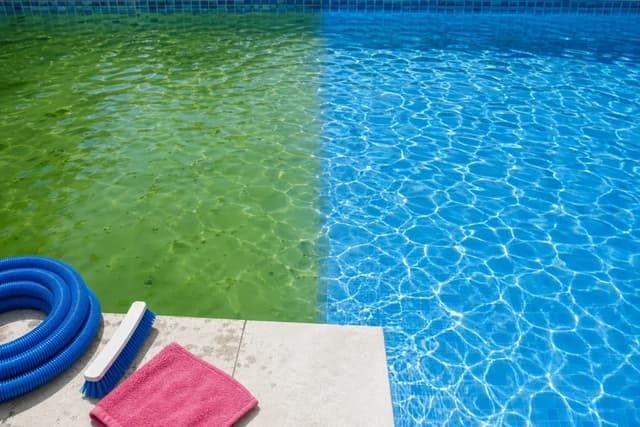
Chlorine sets the clock. In 85°F water with full sun and low stabilizer, a pool can lose most of its free chlorine in a few days. Once chlorine nears zero, algae can take hold within 24–48 hours.
Days 1 to 7 usually look fine. Around days 9 to 12 in summer, chlorine runs low, the water hazes, and by the next visit the walls are slick or green. Green-to-clean recovery typically costs $300–$800, which equals six months to a year of biweekly savings. See pool algae removal for what recovery involves.
| Break-even check | Typical amount |
|---|---|
| Yearly saving from biweekly | $480–$720 |
| One green-to-clean recovery | $300–$800 |
| Result of one bloom a year | Most or all of the saving is gone |
Debris adds to the risk. A full skimmer basket restricts flow, and poor circulation makes chlorine less effective. Two weeks of oak or palm litter can be enough to choke the system.
When each schedule fits
| Your situation | Recommended schedule |
|---|---|
| Unscreened pool under trees, any season | Weekly |
| Screened pool with a salt system, summer | Weekly, or biweekly with a midweek chemical check |
| Screened pool with a salt system, winter | Biweekly |
| Desert pool in July and August | Weekly |
| Pool used daily by kids or renters | Weekly |
| Pool has had algae before | Weekly |
| Light use, and you skim and test chlorine yourself | Biweekly |
| Water below about 75°F | Biweekly is usually safe |
Middle-ground schedules
- Seasonal switching: weekly from April through October, biweekly from November through March. Many pros price each season separately.
- Biweekly full service plus a chemical-only stop in the off week, so chlorine is checked every 7 days for less than full weekly service.
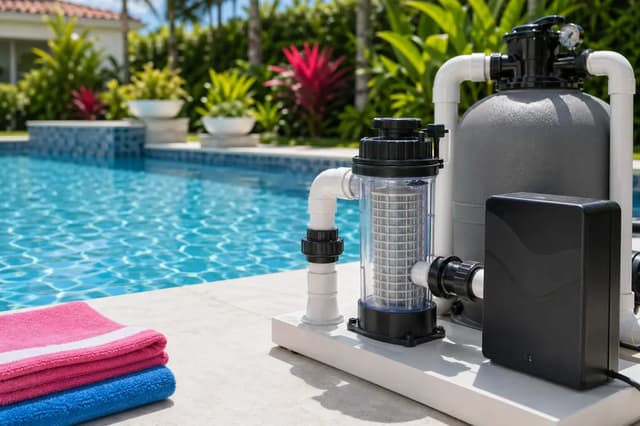
- Biweekly service with a salt system or chlorinator. See salt water conversion for what adding one involves.
Contract terms to check before you switch
- Who pays when algae starts between visits. Some pros include a return visit; others bill a green-to-clean recovery. This clause decides whether biweekly saves money.
- Whether filter cleaning stays on the same schedule as weekly customers. A dirty filter is a common reason the second week fails.
- What you are expected to do between visits, in writing.
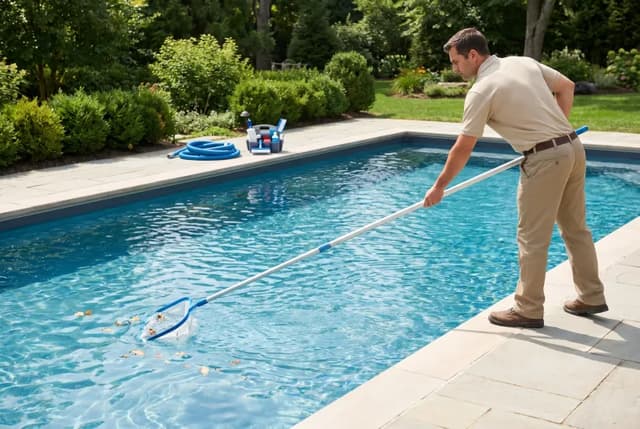
Between visits: skim leaves, empty the skimmer basket, keep the pump on its normal schedule and test chlorine midweek. The pool chemical calculator gives the chlorine dose for your pool's volume. For the full price picture by service and state, see how much pool cleaning costs.
What weekly pool service costs near you
Frequently asked questions
How much cheaper is biweekly pool service?
Typically $40–$60 a month less than weekly for an average pool. Biweekly usually costs 65–75% of the weekly price because each visit takes longer and needs more chemicals.
Will my pool turn green with biweekly service?
It can in hot weather. Chlorine often runs low in the second week of summer, and algae can start within a day or two once it does. A chlorinator or salt system lowers the risk.
Can I switch to biweekly in winter only?
Yes, and it is common in the Sunbelt. Cooler water holds chlorine longer and slows algae, so many owners go biweekly from November through March and back to weekly in spring.
What should I do between biweekly visits?
Skim leaves, empty the skimmer basket, keep the pump on its normal schedule, and test chlorine midweek. Add chlorine if it is low.
Does biweekly service include filter cleaning?
It should, on the same schedule as weekly customers, typically every three to six months. Ask for it in writing, because a loaded filter is a common reason the second week fails.
Is biweekly service enough for a saltwater pool?
Often, because the cell adds chlorine every day. The salt level and cell plates still need checking, and pools under trees still need weekly debris removal.
Method: prices on this page are rounded typical ranges for residential pools, built from common pool-service pricing, equipment prices and contract structures in Sunbelt markets. They are planning ranges, not Poolside quotes, survey averages or guaranteed prices. Reviewed October 14, 2026.
Poolside cost guides are built from common pool-service pricing and contract terms in Sunbelt markets. Every price is a typical planning range, not a quote.
More Poolside guides →