
Pool Pump Repair
Prepare for a pool pump diagnosis: record noise, flow or display symptoms, and learn what to ask before approving a repair.
Service launch statusPoolside is preparing to launch service. No fulfillment area is currently open. You can explore the request process, but a visit, local technician, price, or appointment is not confirmed.
A pro needs to diagnose the pool or equipment before final pricing.
Describe your pool issue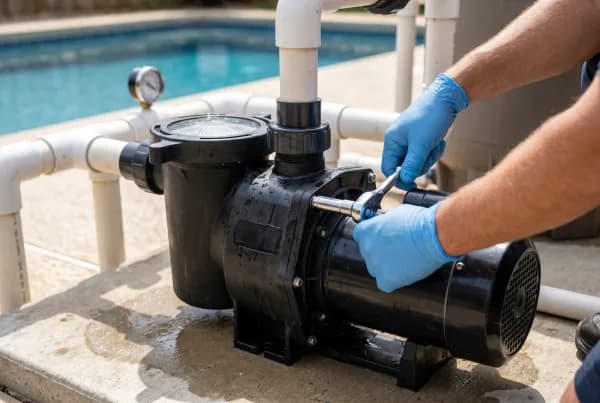
Pool pump problems: what to record before a repair.
A pump that will not start, loses prime, makes unusual noise, or runs without moving water can have different causes. Describe the symptom before choosing a replacement. The observations below help you prepare for a qualified diagnosis without opening pressurized or electrical equipment.
The pump loses prime or moves little water
Pentair's SuperFlo troubleshooting guide lists low water, air entering the suction side, and restrictions among possible causes. Observe the pool water level and any visible air or leaks from a safe distance. A technician must distinguish a plumbing or circulation problem from a failed pump.
The pump is noisy or stops running
Record whether the sound occurs at startup or throughout operation, and copy any display message. Pentair lists several possible noise and shutdown causes, so sound alone is not proof that the motor needs replacement. Do not keep restarting equipment that trips its protection.
The display is blank or a protection device trips
Do not open the drive or motor enclosure or work on wiring. Pentair warns that stored electrical charge can remain inside the drive after power is removed. A qualified professional should investigate electrical faults; a repeated trip is not something to bypass.
Information to have ready
- Record the model and displayed fault code; photograph the label only if safely accessible.
- Note the programmed schedule, speed shown on the normal display, and when the problem started.
- Describe visible water loss, recent filter service, and changes to valves or other equipment without altering them to test a theory.
Understand the proposed work
Ask whether the problem is in the pump, its controls, or the connected circulation system. For a replacement proposal, ask how the selected model fits the pool's plumbing, filtration, and controls. Comparing a component repair with a whole-pump replacement requires the actual diagnosis, compatible parts, and a clear installation scope.
Questions to ask about the quote
- Request an itemized diagnostic charge, repair labor, parts, and any replacement alternative.
- Confirm whether seals, plumbing changes, electrical work, control setup, and removal of old equipment are included.
- Ask about parts and labor warranties and the operating checks performed after completion.
Useful records and tools
Published by Poolside. References checked October 23, 2026. These resources cover specific models; follow the instructions for your own equipment. This preparation guide does not replace a professional diagnosis.
What a diagnosis may cover
Equipment and display
Record the pump model, normal display settings, and any fault message without opening the equipment.
Noise and circulation
Describe when unusual noise occurs, visible water loss, or a change in circulation so a technician has useful context.
Questions? Glad you asked.
Does a noisy pool pump always need replacement?
No. The manufacturer lists multiple possible causes. Record the sound and conditions, then have the source diagnosed before approving a motor or complete-pump replacement.
Should I open the pump or filter to investigate?
Do not open pressurized equipment or electrical enclosures using this guide. Follow your model's manual and have servicing performed by a qualified professional. A pump that is not moving water needs attention rather than repeated restart attempts.
How does Poolside handle pool pump repair?
Prepare for a pool pump diagnosis: record noise, flow or display symptoms, and learn what to ask before approving a repair.
Prepare for the next conversation
Use one checklist to organize equipment details, record symptoms, and compare an itemized repair proposal.
Read the equipment repair preparation guide →