A spring opening is most of a day of hands-on work, then one to three days of filtering and chlorine before the water is safe to swim. Pools that went under the cover clear in fall come out green in May when that second part gets skipped.
The steps below are for a pool winterized in a freeze state. Sun Belt pools that ran through a mild winter only need the spring startup list at the end.
When to open and what to have on hand
Open when daytime highs hold above about 70°F, or two weeks before you plan to swim. An early opening is easier than a late one: a pool that sits closed into a warm spring usually blooms under the cover.
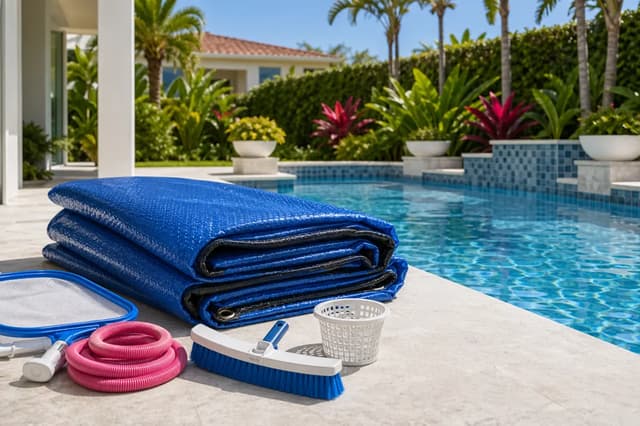
- A cover pump or submersible pump, and a soft broom for the cover.
- Spare drain plugs, a pump lid O-ring and filter gaskets. Check fit now, before stores sell out of your size.
- Silicone O-ring lubricant made for pools. Petroleum jelly swells rubber seals.
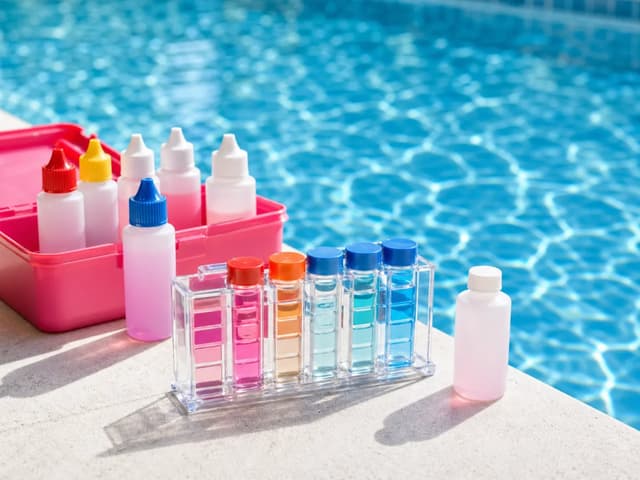
- A drop-count test kit that reads free chlorine, pH, alkalinity, calcium hardness and CYA.
- Liquid chlorine or cal-hypo, pH adjusters, and stabilizer if CYA tested low at closing.
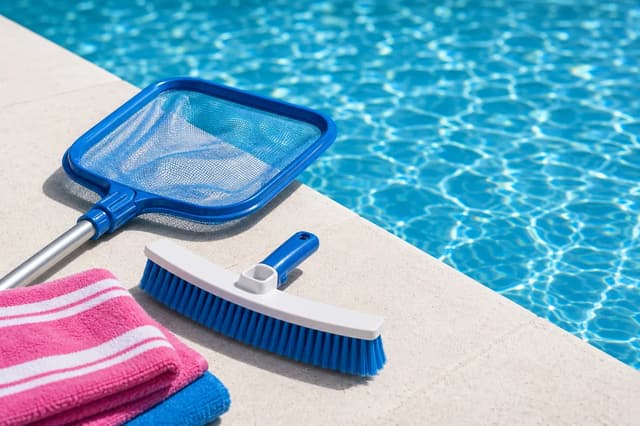
- A leaf net, wall brush, vacuum and a hose to top off the water.
Step 1: Take the cover off cleanly
Anything sitting on the cover ends up in the pool if it tips in. Pump standing water off a solid cover and sweep off leaves first. For a mesh safety cover, clear debris, then release the springs from the anchors with the installation tool.
Fold or roll the cover away from the water, hose it down, and scrub it with a soft brush. Dry it completely before folding it into a sealed bin. A damp cover grows mildew, and a cover left on the lawn kills grass and draws rodents. Screw safety cover anchors down flush with the deck so nobody trips on them.
Step 2: Restore the plumbing and equipment
- 1Pull the winterizing plugs from the return lines and skimmer, and remove the ice compensator or skimmer plug.
- 2Reinstall the drain plugs on the pump, filter, heater and any chlorinator. Wrap threaded plugs with pool thread tape if they wept last season.
- 3Inspect the pump lid O-ring and replace it if it is flat, cracked or stretched. A worn lid O-ring is the most common reason a pump will not hold prime.
- 4Reinstall equipment stored indoors, such as the salt cell, pressure gauge or a removable pump motor.
- 5Set valves to their normal operating positions and turn a multiport valve to Filter.
Step 3: Raise the water level and start up
Fill to the middle of the skimmer opening. Fill the pump basket housing with a hose, seat the lid, and turn the pump on. It should catch prime within 2 to 3 minutes. Open the air relief valve on top of the filter until a steady stream of water comes out, then close it.
Walk the equipment pad while it runs. Look for drips at unions and plugs, listen for grinding or squealing, and write down the filter pressure as your clean baseline. If the pump runs dry for more than 5 minutes without catching prime, shut it off and work through the pump troubleshooting guide. Dry running burns the shaft seal.
Step 4: Clean, test and balance
Net out leaves, brush the walls and floor, and vacuum. Vacuum heavy fine sediment to waste so it skips the filter. Then test all five numbers, not just chlorine. Rain and snowmelt over the winter dilute stabilizer, alkalinity and calcium.
Adjust alkalinity first, then pH, then calcium and stabilizer. Ranges are in pool chemical levels explained, and the pool chemical calculator converts each reading into a dose for your volume. Stabilizer takes 2 to 5 days to dissolve fully, so add it on opening day and retest CYA a week later.
Step 5: Shock and filter until the water passes
Every opening gets a shock, even when the water looks clear. Raise free chlorine to about 40% of the CYA reading: roughly 12 ppm with CYA at 30, or 16 ppm with CYA at 40. Hold it there with the pump running around the clock. One gallon of 10% liquid chlorine raises a 10,000-gallon pool about 10 ppm.
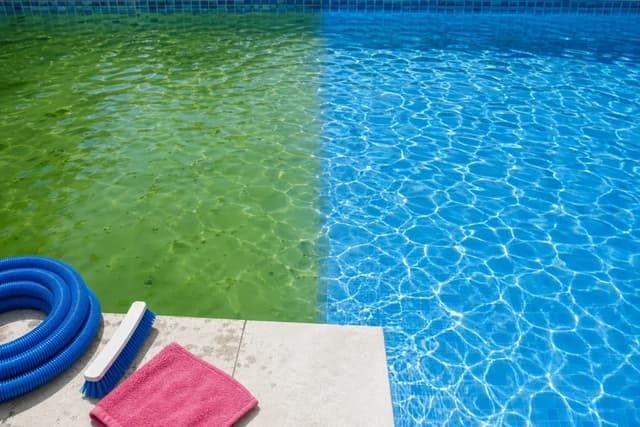
Test chlorine morning and evening, dose back to target, and brush daily. The pool is ready when the water is clear, combined chlorine reads 0.5 ppm or lower, and free chlorine drops 1 ppm or less overnight. A clear opening usually passes in 1 to 2 days. A pool that opened green takes about a week; follow the green pool cleanup steps.
Clean or backwash the filter when pressure climbs 8 to 10 psi above the baseline you recorded. Openings load filters fast, so expect at least one cleaning in the first three days.
Common opening problems
| What you find | Likely cause | First step |
|---|---|---|
| Pump runs but will not catch prime | Low water, a forgotten plug, an air leak at the lid O-ring or a closed valve | Check water level, plugs and valves, then the O-ring |
| Water under the pump or filter | A drain plug left out, a dried gasket or freeze damage | Shut down and find the source before running again |
| Filter pressure far above last season | Dirty media left in over winter, or a closed return valve | Clean the filter and open the returns |
| Brown or rust-colored water | Metals from fill water or corroded equipment | Test for iron and copper before shocking; high chlorine can stain |
| Stains where leaves sat on the floor | Tannins from leaves | Shock and brush; most organic stains fade within days |
Spring startup in the Sun Belt
Pools in Florida, Texas, Arizona and most of California stay open year-round. Spring means ramping back up once water passes about 70°F.
- Lengthen pump run times to summer settings, enough to turn over the full volume at least once a day.
- Raise salt generator output and confirm salt level and cell condition.
- Clean the filter before oak pollen and spring storms load it up.
- Retest stabilizer and alkalinity after the rainy months.
- Shock once to clear combined chlorine left from winter.
- Confirm freeze-protection settings did not leave the run schedule changed.
When to call a pro
Most homeowners can handle an opening. A pro saves a day of work and catches equipment faults before they turn into midsummer breakdowns.
- The pump will not prime, trips the breaker, or leaks after startup.
- You find cracked fittings or a split pump or filter housing from freeze damage.
- The pool opened green or swampy and you would rather skip a week-long cleanup.
- The heater shows error codes or will not light after winter.
What weekly pool service costs near you
Frequently asked questions
How long after opening a pool can you swim?
Once the water is clear, free chlorine has dropped back to its normal range, and pH is between 7.2 and 7.8. A pool that opened clear is often ready in one to three days. A pool that opened green can take a week or more.
Should I shock the pool when opening?
Yes. Raise free chlorine to about 40 percent of your stabilizer reading and hold it until the water passes an overnight chlorine loss test of 1 ppm or less. This burns off organic material that built up over the winter.
Why is my pool green after removing the cover?
Chlorine ran out under the cover and algae grew as the water warmed. It is common when the pool opens late or was not shocked well at closing. Clean out debris, shock to the level your stabilizer requires, and run the filter continuously.
How much does it cost to open a pool?
Chemicals and small parts for a DIY opening often run under a couple hundred dollars. Professional openings commonly cost a few hundred dollars, and more if the pool opens green or needs equipment repair.
When should I open my pool?
When daytime highs are consistently around 70 degrees or warmer, or about two weeks before you plan to swim. Opening before the water warms is usually easier than opening late.
Poolside guides are written for homeowners and checked against current pool chemistry and equipment guidance. Doses assume a standard drop test kit and are given per 10,000 gallons.
More Poolside guides →