A pool in Florida, on the Texas Gulf Coast or anywhere else hurricanes reach needs about an hour of prep before a storm and a careful restart after it. Pools prepped this way usually come through with nothing worse than a heavy debris cleanup.
The rule people get wrong most often: leave the water in. A full pool is the safest pool in a storm.
Why you should not drain the pool
Water weight holds an in-ground pool in place. During a hurricane the soil saturates and groundwater pushes up on the shell, and Florida and coastal Texas start with high water tables. An empty or half-empty in-ground pool can crack, shift or lift out of the ground. Vinyl liners can float and tear.
The water also shields the finish from flying debris, and a full pool absorbs a lot of rain before any of it reaches the deck.
Most pools need no level change at all. If the pool has no overflow line and the deck drains toward the house, lower the water by a foot at most to leave room for rain. Keep it above the skimmer opening if the pump will run again before landfall.
Before the storm: the 48-hour checklist
Start this list as soon as a hurricane watch covers your area.
- Bring in everything wind can lift: pool furniture, umbrellas, toys, skimmer poles, brushes, hoses and planters.
- Remove a solar or soft cover. Wind turns it into a sail, and debris is easier to net out of open water than out from under a wrecked cover. For mesh or solid safety covers, follow the manufacturer's storm guidance.
- Balance pH to 7.2 to 7.6.
- The day before landfall, raise free chlorine to about 10 ppm (higher if CYA is above 50) so the pool has a reserve against rain and debris. The pool chemical calculator gives the dose for your volume.
- Empty the skimmer and pump baskets and clean the filter so the system starts the cleanup with full capacity.
- Shut off power to the pump, heater, salt system, lights and automation at the breaker before the wind arrives.
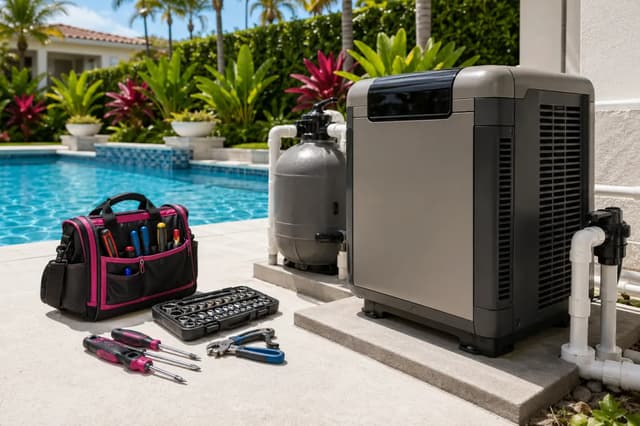
- If the equipment pad is likely to flood, wrap the pump motor and control boxes in plastic and tie them down, or disconnect the motor and move it indoors if you know how to do that safely.
- Secure or remove loose screen panels on an enclosure.
After the storm: restart in the right order
Leave the breakers off until the pad and pool are checked. A pump that starts against a basket packed with leaves, or equipment that sat underwater, can be ruined the moment power returns.
- 1Inspect the equipment pad first. If it was underwater, keep the power off until an electrician or pool tech checks the motor, controls and wiring.
- 2Look for downed power lines near the pool, deck or enclosure. If any are close, stay out of the water and call the utility.
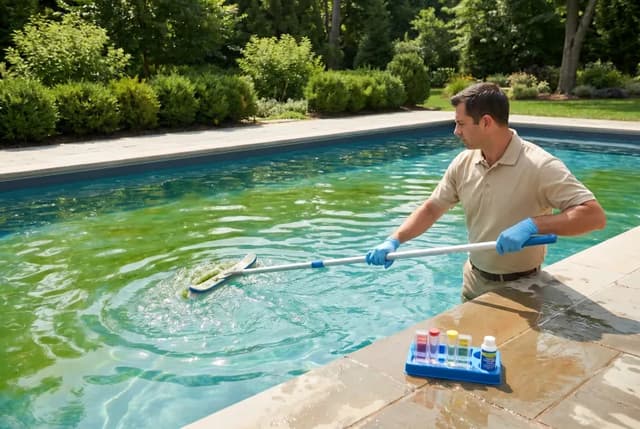
- 3Net out large debris before running the pump. Branches, shingles and screen fragments clog lines and crack impellers.
- 4Empty the skimmer and pump baskets, then check the water level. If rain overfilled the pool, drain back to mid-skimmer using the filter's waste setting or a submersible pump.
- 5Restore power, prime the pump and confirm normal flow and filter pressure. Clean the filter as soon as pressure climbs 8 to 10 psi above its clean reading.
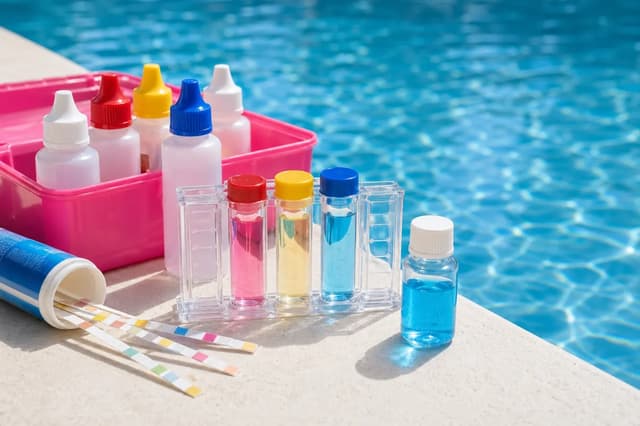
- 6Test free chlorine, pH, alkalinity, CYA and, for salt pools, salt. Heavy rain dilutes all of them.
- 7Shock to about 40% of the CYA reading and run the pump around the clock until the water is clear and free chlorine drops 1 ppm or less overnight.
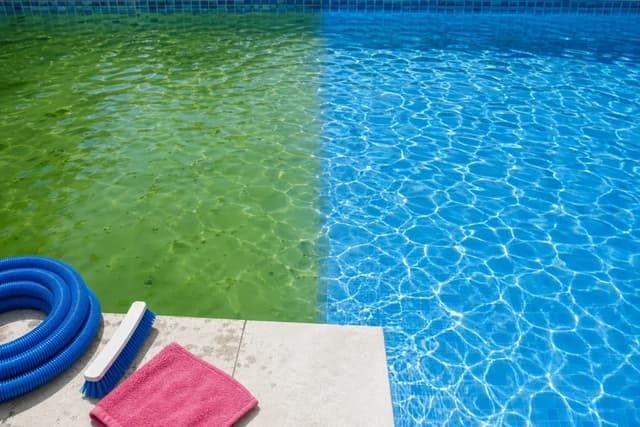
Expect cloudy or green water within a day or two of a big storm. Rain and debris carry in organic material, phosphates and sometimes floodwater. The green pool cleanup guide covers shock levels by stabilizer and how to hold them.
If floodwater got into the pool
Storm surge and overland flooding carry sewage, fuel, fertilizer and silt. Treat any pool that took floodwater as contaminated until it is cleaned and tested.
- Keep everyone out of the water until it is clear and tests normal.
- Vacuum silt to waste so it bypasses the filter, then shock and hold the level until the water clears and passes an overnight chlorine test.
- If sewage, saltwater surge or a fuel sheen reached the pool, ask a pool professional whether a partial drain and refill is needed. Check the local water table before lowering the water more than a foot.
- Have a pro inspect any heater, salt cell or automation panel that sat in floodwater, even if it appears to run.
Prep at the start of the season
The Atlantic hurricane season runs June 1 to November 30. These jobs take an afternoon in May and are hard to do during a storm watch.
- Find each pool breaker and label it.
- Stock enough liquid chlorine or cal-hypo for two shock treatments, and store it dry and away from acid.
- Photograph the pool, enclosure and equipment pad for insurance records.
- Have the screen enclosure and nearby trees inspected, and remove dead branches.
- Replace test kit reagents older than a year.
- Know your pool's volume in gallons so post-storm doses are quick. The pool volume calculator works it out from length, width and depth.
When to call a pro
Most post-storm cleanup is netting and brushing you can do yourself. Bring in a pro when it involves electrical risk, damaged equipment or contaminated water.
- The equipment pad flooded, or a breaker trips when you restore power.
- The pump will not prime or grinds after the storm.
- Floodwater, sewage or surge water reached the pool.
- The pool is full of silt and debris and has turned green.
What weekly pool service costs near you
Frequently asked questions
Should I drain my pool before a hurricane?
No. A full pool is held in the ground by its weight. Draining it during a storm, when groundwater rises, can crack or lift an in-ground shell and float a vinyl liner. Most pools need no change in water level at all.
Should I turn off my pool pump during a hurricane?
Yes. Turn off the pump, heater, salt system and lights at the breaker before the storm arrives. Restore power only after checking that the equipment pad did not flood and clearing debris from the pool and baskets.
Should I shock my pool before a hurricane?
Raise free chlorine to about 10 ppm the day before the storm so the pool has a reserve against rain and debris. Plan to shock again after the storm, once the debris is out and the pump is running.
Should I put patio furniture in the pool during a hurricane?
Bring furniture indoors instead. Furniture in the pool can scratch the finish and stain it with rust and dyes. Use the pool only as a last resort, and only for plastic resin furniture.
How do I clean my pool after a hurricane?
Net out large debris before running the pump, empty the baskets, lower the water to mid-skimmer if rain overfilled it, then restart the equipment. Test, shock, and run the filter continuously until the water clears and holds chlorine overnight.
Poolside guides are written for homeowners and checked against current pool chemistry and equipment guidance. Doses assume a standard drop test kit and are given per 10,000 gallons.
More Poolside guides →