Most outdoor residential pools in warm climates need a full cleaning once a week, with a quick skim and chlorine check in between. Some pools can stretch to every other week, and a few need more than weekly.
The schedule follows how fast the pool loses chlorine and collects debris. Water temperature, swimmer load, trees, a screen enclosure and your equipment each move that rate.
What a full cleaning includes
A full cleaning is more than skimming. A standard weekly service visit covers these steps.
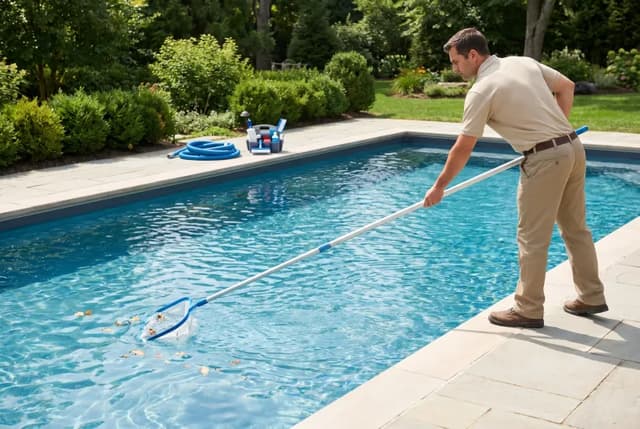
- Skim the surface and net out leaves.
- Empty the skimmer and pump baskets.
- Brush walls, steps and the tile line.
- Vacuum the floor, or confirm the robotic or suction cleaner is doing it.
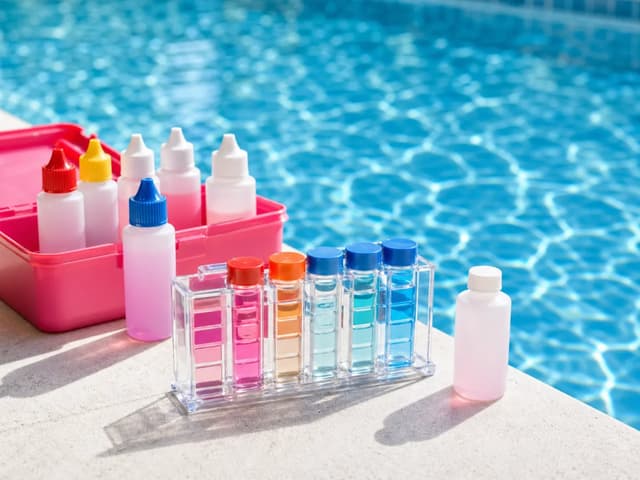
- Test free chlorine, pH and alkalinity, and adjust.
- Check filter pressure and clean or backwash at 8 to 10 psi above the clean reading.
- Inspect the equipment for leaks, new noises and error codes.
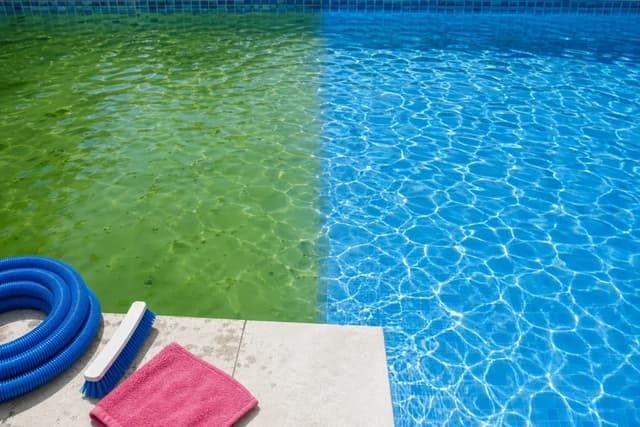
Chemistry is the step you cannot skip. Leaves on the floor make a pool untidy; two days at zero chlorine in summer can turn it green. If you only have time for one task between cleanings, test free chlorine and dose it back to at least 7.5% of your stabilizer reading.
Weekly vs. every other week
Weekly service is standard across Florida, Texas, Arizona, Southern California and the rest of the Sun Belt. Hot water and strong sun burn through chlorine fast, and algae grows quickly once water passes about 80°F. Seven days is about as long as most pools hold before a reading drifts out of range.
Every-other-week cleaning works when chlorine stays steady without a visit and debris is light. That usually takes at least two of the following.
- A saltwater chlorine generator or a well-adjusted automatic feeder supplies chlorine daily.
- The pool sits inside a screen enclosure or has few trees nearby.
- A robotic or automatic cleaner runs several times a week.
- Water is under about 70°F in the cool season, or the pool sees light use.
On a biweekly schedule, someone still needs to test chlorine and empty the skimmer basket once between visits. That five-minute check keeps a biweekly plan from turning into a green-pool cleanup. The cost side of that choice is broken down in weekly vs. biweekly pool service.
What changes the schedule
| Factor | Effect on cleaning needs | What to do |
|---|---|---|
| Water above 85°F | Sun and heat burn chlorine much faster; algae grows faster | Weekly at minimum; check chlorine two or three times a week |
| Heavy swimmer use | Sunscreen, sweat and body oils consume chlorine and cloud the water | Weekly, plus a chlorine check after a pool party |
| Overhanging trees | Sunken leaves stain plaster and consume chlorine as they rot | Weekly, with daily skimming during leaf drop and pollen season |
| Screen enclosure | Blocks most leaves and bugs; fine dust and pollen still get in | Biweekly is often realistic in cooler months |
| Salt chlorine generator | Steady chlorine without manual dosing; the cell scales over time | Biweekly is often realistic; inspect the cell every 3 months |
| Robotic or automatic cleaner | Floor stays clean between visits | Cuts vacuuming time, not chemistry needs |
| Storms and heavy rain | Dilutes chlorine, adds debris and phosphates, shifts pH | Test and adjust within a day of a big storm |
| Pets that swim | Hair and dander load the filter quickly | Empty skimmer and pump baskets more often |
Typical schedules by climate
| Where you live | Swim season | Cool season or off-season |
|---|---|---|
| Florida, Gulf Coast, South Texas | Weekly; many pools need a mid-week chlorine top-up in summer | Weekly or biweekly; pools stay open all year |
| Arizona, Nevada, inland Southern California | Weekly; dust storms can force extra filter cleaning | Biweekly is common once water drops below about 65°F |
| Coastal California | Weekly | Biweekly with chemistry checks between visits |
| Mid-Atlantic, Midwest, Northeast | Weekly from opening to closing | Closed under a winter cover; check cover and water level monthly |
Where pools close for winter, the two big jobs are opening in spring and closing in fall. A clean closing at balanced chemistry means a faster, cheaper opening.
Tasks on a longer cycle
Weekly cleaning does not cover every job. These run on their own schedules.
| Task | Typical frequency |
|---|---|
| Test free chlorine and pH | Two to three times a week in summer; at least weekly otherwise |
| Test alkalinity, calcium hardness, stabilizer | Monthly, and after big refills or heavy rain |
| Backwash a sand or DE filter | At 8 to 10 psi above clean; often every 2 to 6 weeks |
| Deep-clean a cartridge filter | Every 3 to 6 months, sooner in heavy-debris pools |
| Full DE filter teardown | Once or twice a year |
| Inspect and clean the salt cell | Every 3 months, or per the manufacturer |
| Professional equipment check | Once a year, or when something sounds or reads wrong |
Target ranges for each of those readings are in pool chemical levels explained. Dose amounts for your pool size come from the pool chemical calculator.
Signs the schedule is falling behind
- Free chlorine reads at or near zero at each test, even after a dose at the last cleaning.
- Walls feel slippery, or green or brown spots return in corners and on steps.
- The water turns dull or cloudy a few days after each cleaning.
- Filter pressure climbs faster than it used to.
- Leaves sit on the floor long enough to leave tan stains on plaster.
Any one of these means the pool needs more frequent visits or a steadier chlorine source between them, such as a correctly sized tablet feeder or a salt system.
When to call a pro
Plenty of homeowners keep their own pool. Weekly service makes sense when the routine keeps slipping or the water keeps drifting out of balance.
- You travel often and the pool goes a week or more without a chlorine check.
- You have cleared a green pool more than once in a season.
- Heavy tree cover outpaces your skimming and vacuuming.
- You would rather spend weekends swimming than testing and brushing.
Typical prices for each schedule are in how much pool cleaning costs.
What weekly pool service costs near you
Frequently asked questions
Is biweekly pool service enough?
It can be, if the pool has steady chlorine from a salt system or feeder, light debris and moderate use, and someone checks chlorine between visits. In hot summers with trees and heavy use, most pools need weekly service.
How often should I shock my pool?
There is no fixed calendar. Shock when combined chlorine rises above 0.5 ppm, after heavy use or a big storm, or at the first sign of algae. Many pools in hot climates need it every week or two in summer and rarely in winter.
How long should I run my pool pump each day?
Long enough to turn over the full volume at least once a day, which for many residential pools is 8 to 12 hours on a single-speed pump. Variable-speed pumps run longer at low speed for the same turnover and use less energy.
Do pools need cleaning in winter?
Pools that stay open in mild climates still need regular cleaning, often less of it because cool water uses less chlorine. Pools closed under a winter cover need only periodic checks of the cover and water level until spring.
How often should a pool filter be cleaned?
Backwash sand or DE filters when pressure rises 8 to 10 psi above the clean reading. Deep-clean cartridges every three to six months. Tear down a DE filter once or twice a year. Heavy debris or an algae cleanup shortens those intervals.
Poolside guides are written for homeowners and checked against current pool chemistry and equipment guidance. Doses assume a standard drop test kit and are given per 10,000 gallons.
More Poolside guides →